Verify Release Artifacts#
Use this guide when you need to check conda-ship-built artifacts before publishing or wrapping them.
Verification has two layers:
verify the conda-ship tools used by the build
verify the runtime artifacts produced by the build
Verify conda-ship Release Tools In GitHub Actions#
The composite action downloads cs, cs-template, and SHA256SUMS
from a tagged conda-ship release. It verifies GitHub artifact attestations and
then checks SHA256 sums before running cs.
Pin the action source by full commit SHA and pass the matching conda-ship release version:
- uses: jezdez/conda-ship@FULL_RELEASE_COMMIT_SHA # X.Y.Z
  with:
    conda-ship-version: "X.Y.Z"
When the action is invoked by an exact release tag, conda-ship-version can be
omitted for backwards compatibility. Release workflows should prefer full
commit SHA pins.
Self-hosted runners must provide the GitHub CLI because the action calls
gh attestation verify.
conda-ship releases are immutable after publication. If a released asset set is wrong, use a newer release tag instead of expecting the existing tag or files to change.
Verify Staged Checksums#
Every cs build writes a .sha256 file next to the runtime and metadata:
shasum -a 256 --check dist/demo.sha256
On Linux, sha256sum works too:
sha256sum --check dist/demo.sha256
The checksum file covers the staged runtime, runtime lock, package list, info JSON, and external bundle when present.
Inspect Artifact Metadata#
Open the .info.json file:
python -m json.tool dist/demo.info.json
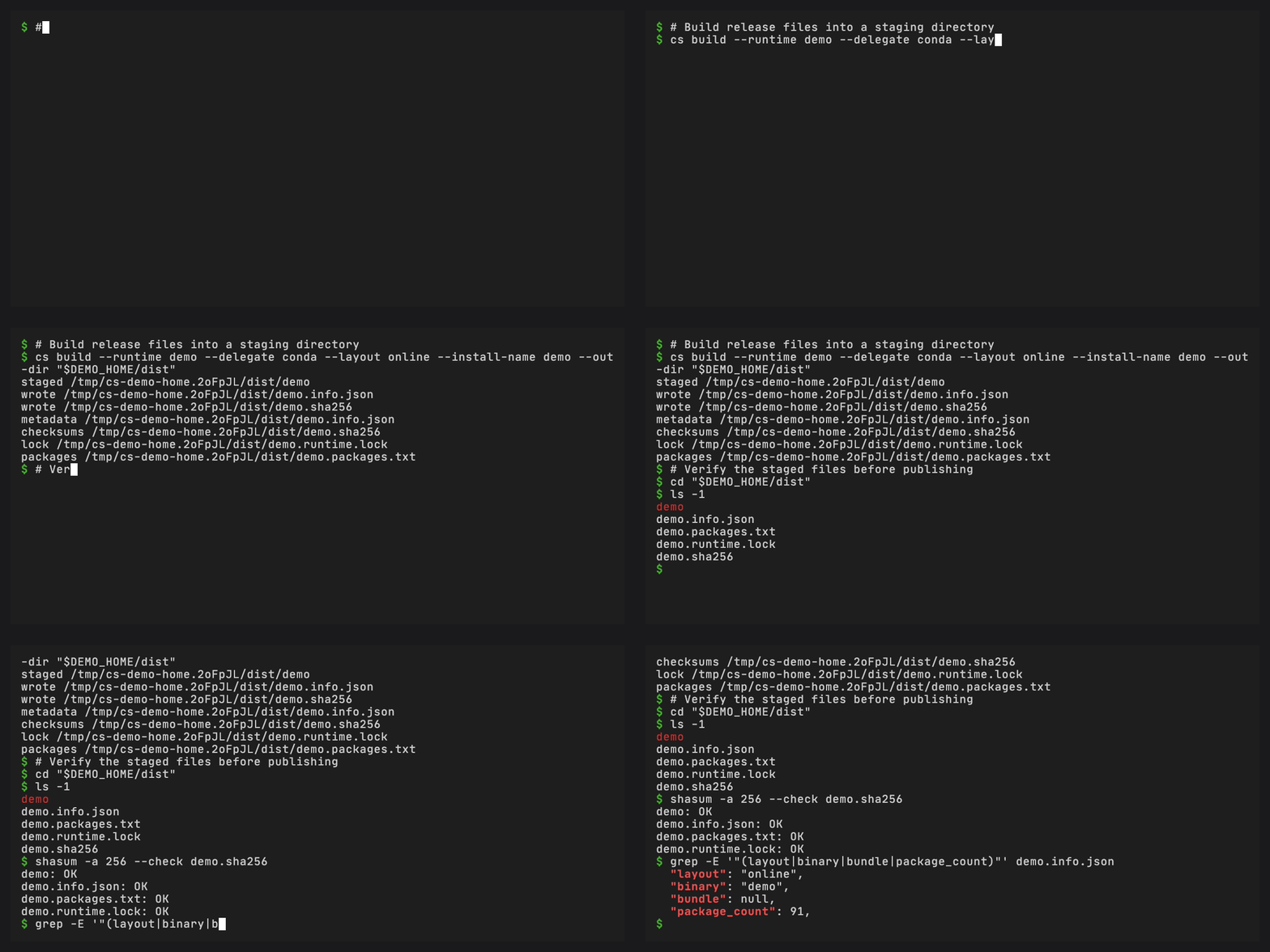
Verify staged files and release metadata before publishing.#
Check:
namelayoutplatformbinarybundlepackage_countchecksums
This file is intended for release tooling and package-manager wrappers. It describes what conda-ship wrote, not what an external installer later did.
Inspect The Runtime Lock#
The staged .runtime.lock is the lock the runtime will use during bootstrap.
It should be reproducible from the committed source lockfile and
[tool.conda-ship].
Use it to answer release questions such as:
Which concrete conda packages are shipped?
Which channels are recorded?
Which platforms are present?
Do not edit it by hand. Change the source manifest or source lockfile instead, then rebuild.
Verify Bundle Contents#
For external bundles, extract into a temporary directory and check that it contains only top-level package archives:
mkdir -p /tmp/demo-bundle
tar --zstd -xf dist/demo.bundle.tar.zst -C /tmp/demo-bundle
find /tmp/demo-bundle -maxdepth 2 -type f
The runtime verifies package archive hashes against the runtime lock before installing. Embedded bundles are verified by the runtime before extraction.
Add Downstream Signing And Release Controls#
conda-ship does not sign downstream runtime artifacts. Sign after cs build,
when the final files are staged and checksums are written.
In GitHub Actions, attest the complete dist-path output:
Warning
Use the latest reviewed actions/attest release in your workflow and pin it by
commit SHA. The SHA below is an example, not a recommendation to keep using that
exact revision indefinitely.
permissions:
  contents: read
  id-token: write
  attestations: write
  artifact-metadata: write

steps:
  - uses: jezdez/conda-ship@FULL_RELEASE_COMMIT_SHA # X.Y.Z
    id: cs
    with:
      conda-ship-version: "X.Y.Z"

  - uses: actions/attest@59d89421af93a897026c735860bf21b6eb4f7b26 # v4.1.0
    with:
      subject-path: ${{ steps.cs.outputs.dist-path }}/*
That attests the runtime binary, .runtime.lock, .packages.txt,
.info.json, .sha256, and the optional external bundle as the output of the
downstream workflow. Verify a published file against that workflow identity:
gh attestation verify dist/demo \
  --repo OWNER/REPO \
  --signer-workflow OWNER/REPO/.github/workflows/release.yml
Good downstream controls include:
GitHub Release artifact attestations
GitHub release immutability
Sigstore signing for uploaded artifacts
in-toto provenance around the packaging workflow
platform-specific signing for installer wrappers
Keep signing outside the generic runtime. A runtime built by conda-ship may be wrapped by several downstream channels, and each channel owns its own trust policy.